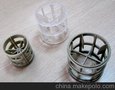
Water Treatment Activated Carbon
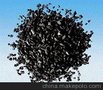
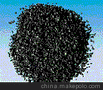
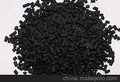
活性炭是疏水性吸附剂,对水溶液中的有机物具有较强的吸附作用,作为城市污水与工业废水处理用的吸附剂。水处理活性炭其原料可以是椰子壳、核桃壳、杏壳、桃壳、木屑、煤质等,其中椰壳活性炭被公认为是最好的一种水处理活性炭。水处理的活性炭有粉状、颗粒状和柱状,其中颗粒状应用最广。活性炭的粒度越小吸附速度越快,但水头损失要增大,一般在8-30目较好。
水处理活性炭三项要求:吸附容量大、吸附速度快、机械强度好。除此之外,远影活性炭还具有比表面积大、孔隙结构发达、不易脱粉、阻力小、化学性能稳定,净化度高、使用寿命长、易再生等特点。
由于活性炭水处理所涉及的吸附过程和作用原理较为复杂,所以影响因素也较多。主要影响因素有活性炭的性质、水中污染物的性质、溶液的PH、溶液的温度、炭处理的过程原理、选择的运转参数与操作条件。
活性炭的吸附容量主要与活性炭比表面积有关,比表面积越大,吸附性能越好;吸附速度主要与粒度及活性炭的孔分布有关。水处理活性炭要求过渡孔(半径20~1000埃)较为发达,有利于吸附质(水中污染物)向孔中扩散。此外活性炭的表面化学性质、极性及所带电荷,也影响吸附的效果。
活性炭的表面有大量的羟基和羧基等官能团,可以对多种有机物质进行化学吸附和静电引力作用。活性炭能去除水中对于阴离子交换剂有害的腐殖酸、富维酸、木质素磺酸等有机物质;也可以去除像游离余氯一类对阳离子交换剂有害的物质。通常,能够去除63%〜86%胶体物质;50%左右的铁;以及47%〜60%的有机物质。活性炭对水中溶解的有机污染物,如苯类化合物、酚类化合物、石油及石油产品等具有较强的吸附能力;对用生物法和化学法难以去除的有机污染物,如色度、异臭、亚甲蓝表面活性物质、除草剂、杀虫剂、农药、合成洗涤剂、合成染料、胺类化合物,及许多人工合成的有机化合物等都有较好的去除效果;活性炭对某些重金属化合物也有较强的吸附能力,如汞、铅、铁、镍、铬、锌、钴等,因此,活性炭用于电镀废水、冶炼废水处理上也有很好的效果。
水处理活性炭被广泛应用于生活用水及食品工业、化工、电力等工业用水的净化、脱氯、除油和去臭等。
Summary
Products are currently used for water treatment have activated carbon, silicon oxide, activated alumina, zeolite, diatomite and ion-exchange resins. The aluminum - silicone sorbents are hydrophilic adsorbent, they are selective adsorption to polar substances, so generally as the moisture absorption agent, dehydrant and nonpolar solution adsorbent. Activated carbon is a hydrophobic adsorbent, has strong adsorption to the organic compounds in aqueous solution, so generally as the city sewage and industrial wastewater treatment adsorbents.
The raw materials of water treatment activated carbon have coconut shells, walnut shell, apricot, peach shell, wood, coal and so on, the coconut shell activated carbon is considered the best water treatment activated carbon. Water treatment activated carbon has powder, granule and columnar, among them granule is the most widely used. The smaller granularity, the faster absorption, but head loss increases, usually in 8-30 mesh is better.
Water treatment activated carbon three requirements: large adsorption capacity, quick adsorption rate, good mechanical strength. In addition, Yuanying activated carbon has large specific surface area, abundant pore structure, not easy off powder, low base layer resistance, chemical stability, high degree of purification, long service life, easy regeneration.
The main influencing factors to water treatment process of activated carbon
Due to the adsorption process and action principle of activated carbon water treatment involves more complex, so there are a lot of influence factors. The main factors include the properties of activated carbon, pollutants properties in water, solution PH, solution temperature, carbon treatment process principle, selective operating parameters and operating conditions.
Activated carbon adsorption capacity is mainly related to its specific surface area, the greater specific surface area is, the better adsorption property is. Adsorption rate is mainly related to grain size and pores distribution of activated carbon. Water treatment activated carbon requires abundant transition hole (radius is 20 to 1000 angstroms), that is conducive to the adsorbate (pollutants in water) spreads to the hole. In addition, activated carbon surface chemical properties, polarity and electric charge also affect the adsorption effect.
Application
Activated carbon surface has a large number of functional groups such as hydroxyl and carboxyl, can undertake chemical adsorption and electrostatic attraction to various organic substances. Activated carbon can remove the organic substances such as humic acid, fulvie acid, lignosulfonic acid etc. which are harmful to anion exchange agent; also can remove the substances such as free chlorine residual which is harmful to cation exchanger. Generally, activated carbon can remove 63%-68% colloidal substances, around 50% ferrum, 47%-60% organic substances. Activated carbon has strong adsorption capacity to water dissolved organic contaminants, such as benzenes, phenols, petroleum and petroleum products. Organic pollutants by biological method and chemical method is difficult to remove, such as chrominance, foreign odor, methylene blue surface active substances, herbicides, pesticides, agricultural chemicals, synthetic detergents, synthetic dyes, amine compounds, and many synthetic organic compounds, activated carbon have good effect to removal them. Activated carbon has strong adsorption capacity to some heavy metal compounds, such as mercury, plumbum, ferrum, nickel, chromium, zinc, cobalt, etc., therefore, activated carbon has a good effect to electroplating wastewater and treatment smelting wastewater treatment. Activated carbon is widely used for domestic water and food industry, chemical industry, electric power industry, etc. for water purification, dechlorination, oil removal and deodorization.